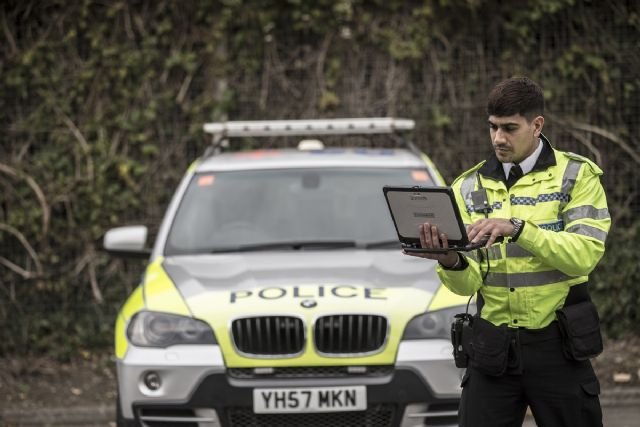
PC, a leading company in the development of innovative technologies and professional solutions, has emphasized the importance of stability and durability in mobile devices designed for security forces. This approach is necessary to ensure that front-line officers can carry out their tasks effectively and safely, even in the most adverse conditions.
Budgetary responsibility is critical, and every purchase decision must balance technological advancements with economic constraints. Police procurement departments must consider whether the technology being purchased is appropriate for the operational environment in which officers typically work. “It’s important to maximize the benefits of technology and avoid the pitfalls of innovation without losing sight of costs,” said Charlotte Langridge, PC Public Sector Business Manager.
Devices adapted to the special needs of the police
Law enforcement mobile devices must withstand extreme environmental conditions such as wind, rain, and extreme cold or high temperatures, as well as shocks, drops, and spills. Standard tablets and computers are insufficient to cope with these conditions, as their build quality is flimsy and they lack the robust security required for the police sector.
T’s are designed with EMS crews in mind. Equipped with 4G/5G connectivity, they provide fast access to data and applications in the field, minimizing downtime. In particular, “the latest model, the T G2, is the most customizable and secure tablet on the market, with options such as a fingerprint reader for secure access to important data,” Langridge emphasizes.
“In a value-driven world, the factors of better, faster and more efficient are key in police procurement. T-devices represent a cost-effective and efficient solution for emergency responders, ensuring they can carry out their duties today and in the future,” concludes the business manager.
T use cases
Some institutions have already incorporated various T models in their facilities or workplaces. For example, the ROSEN Group, a Swiss company specializing in the inspection of complex technical systems, has improved its data recording and analysis capabilities with the T 40 devices. Jörg Köbbe, ROSEN’s IT product and service manager, emphasized features such as reliability and ease of use.
On the other hand, Greater Manchester Fire and Rescue Service (GMFRS) has introduced the T 33 for day-to-day operations. These computers have proven their importance in the new emergency services network, facilitating emergency management in a region with many operational challenges. In addition, in the Netherlands, the emergency medical organization Axira has included the T FZ-G2. Thanks to its compatibility with glove-operated touchscreens and connectivity to medical devices, Axira has been able to significantly improve work efficiency.