The year 2025 marked the end of the phase of experimentation with artificial intelligence to give way to the era of automation. According to Google’s latest search trends report, the term that is undisputedly dominating global conversations is IA Agéntica (Agentic AI)displacing Generative AI, which topped the rankings in previous years.
This change reflects a deep technological transformation: users are no longer looking for tools that simply create text or images, but rather systems that can perform complex actions and make decisions without constant human supervision.
Analysis of search volumes shows that public curiosity and corporate interest have shifted toward practical utility and security. If 2023 was the year of wonder and 2024 was the year of integration, then 2025 is defined by fulfillment.
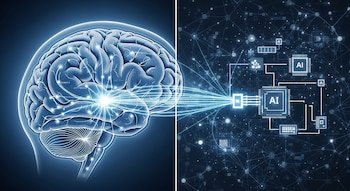
The list of the ten most frequently searched terms offers a clear X-ray view of the priorities of today’s digital society, where operational efficiency, visual immersion and protecting data from futuristic threats form the new normal.
1. IA Agéntica (Agentic AI)
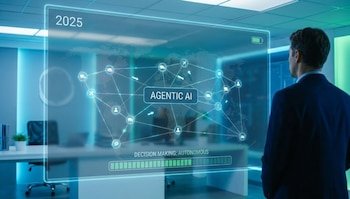
The concept of Agent II It was positioned as one of the most relevant of the year due to the transition from traditional chatbots to systems that can perform tasks autonomously. Unlike previous generations, these agents can make decisions, plan actions, and execute activities without constant supervision, making this technology a key tool for companies seeking to automate complex processes.
The adoption of these agents has led to the development of “digital workers”, systems trained to manage operational tasks such as reservations, logistics planning or data analysis. Its growth reflects changing perceptions about the role of artificial intelligence in productivity.
2. Spatial calculations
The increase in the number of immersion devices has increased interest in spatial computinga technology that allows digital elements to be combined with physical environments to create three-dimensional experiences. Advances in viewing software such as Apple Vision Pro and new alternatives from Samsung and Meta have contributed to this trend of greater visibility and home use.
This technology paves the way for more interactive work and entertainment environments where programs, windows and virtual objects can be manipulated as if they were real.
3. Post-Quantum Cryptography (PQC)
The development of more powerful quantum computers has raised concerns about the future of digital security. Thus, Art of post-quantum cryptography It became one of the most frequent searches. This technology branch seeks to create new encryption mechanisms capable of resisting attacks that current machines cannot contain.
Technology companies and governments have begun implementing algorithms designed to anticipate quantum possibilities in order to avoid compromises in data protection.

4. Gemini (and LLM War)
Term Twins It has established itself as an everyday concept thanks to its integration into Android services, productivity tools, and home devices. Its scope has led to the fact that it has ceased to refer only to a specific model and has become synonymous with personal assistants based on multimodal artificial intelligence.
This leadership comes in a context where competition between language models is intensifying and platforms are seeking to integrate artificial intelligence at all levels of the digital ecosystem.
5. Smart home hubs
Adoption of the Matter standard is allowed smart home hubs They will be positioned as central elements of home automation. The search has shifted from individual devices to systems capable of managing energy, security and daily routines in a coordinated manner.

The trend shows an evolution towards homes that work with greater autonomy and allow the user to control functions comprehensively.
6. Sustainable technologies (Green Tech)
Increasing energy consumption in data centers and the demand for more efficient solutions sustainable technologies one of the most popular terms. Innovations are focused on low-power artificial intelligence systems and advanced batteries for mobile devices.
This approach responds to new environmental regulations and the need to reduce the environmental impact of technological infrastructure.
7. Deepfake Security
The presence of electoral processes in different regions and the spread of manipulated content have increased interest in security from deepfakes. Validation tools and digital watermarking have become essential to identify AI-generated content.

Concerns about misinformation have prompted the development of protocols to guarantee the authenticity of images and videos.
8. Artificial Intelligence Management (TRISM)
Concept I have TRiSMcovering the management of trust, risk and security in artificial intelligence systems, has established itself as a fundamental term for companies. Organizations are looking for mechanisms to validate models, avoid biases, reduce errors, and protect data.
This boom reflects the need to regulate increasingly autonomous technologies.
9. Hybrid computing
Advances in hardware have allowed Art hybrid computingwhich combines CPUs, GPUs and NPUs, is becoming the standard in notebooks and mobile devices. This architecture allows you to run AI models locally without depending on the cloud, a feature that is increasingly appreciated by users.
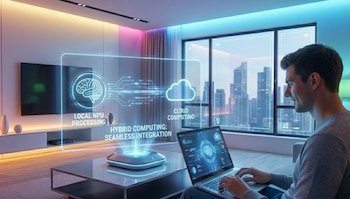
The trend shows interest in hardware capable of handling advanced functions efficiently.
10. Wearables de Salud (Health Tech)
Moose wearables for health have experienced significant growth thanks to devices that go beyond basic activity tracking. New generations of smart rings and non-invasive glucose sensors are focused on monitoring biomarkers that allow detecting abnormalities and predicting possible diseases.