In recent years, women in Mexico and Latin America have gained careers in science, technology, engineering and mathematics (STEM), but they still face various obstacles. From Art lack of female references even superstitions and gender stereotypesthese barriers limit their full development and access to opportunities.
According to the Mexican Competitiveness Institute (IMCO), by 2022 there will be 494,753 women studying STEM programs in Mexico, representing 38% of the total number of students in these careers. Although this number has increased by four percentage points over the past 10 years, the rate of growth has not been sufficient. In addition to these limited achievements, psychological violence in classrooms and gender biases remain serious obstacles in schools and companies. Derogatory comments and sexist attitudes not only undermine women’s confidence scientific careerbut also affect their persistence and professional development.
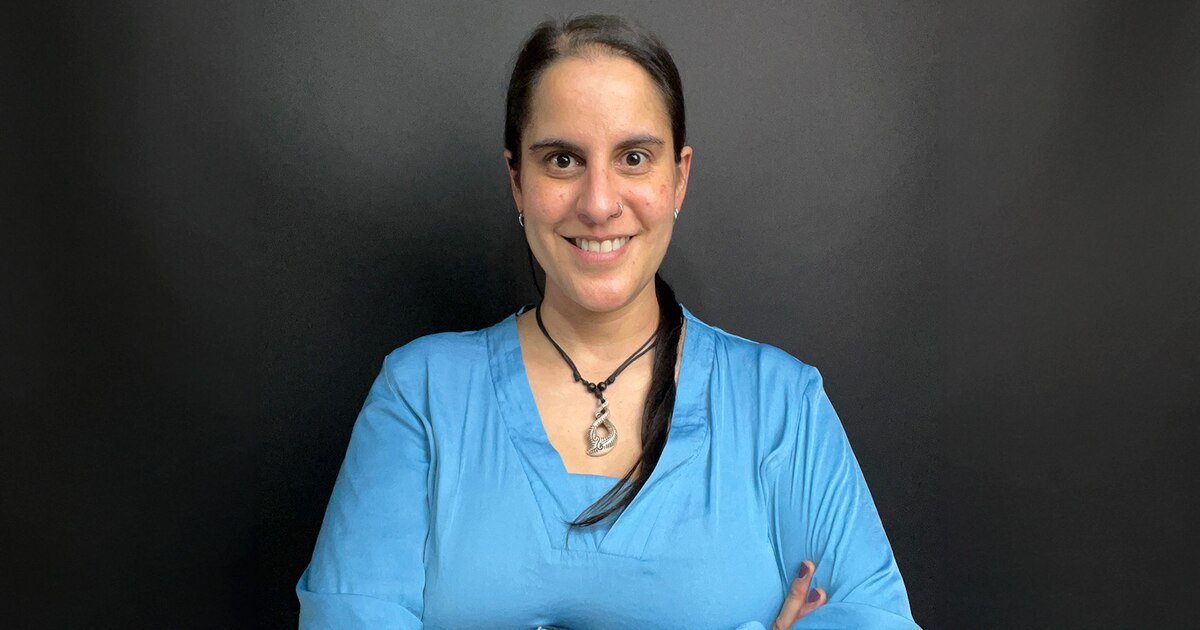
To delve into these issues, Infobae spoke to Flores-Gracia candies, who is a biologist with a PhD and an MSc in the commercialization of science and technology. In the interview, Flores-Gracia shared her perspective on the challenges women face in STEM, as well as the strategies and policies that can be implemented to create a more equitable and supportive environment for the professional development of women in these fields.
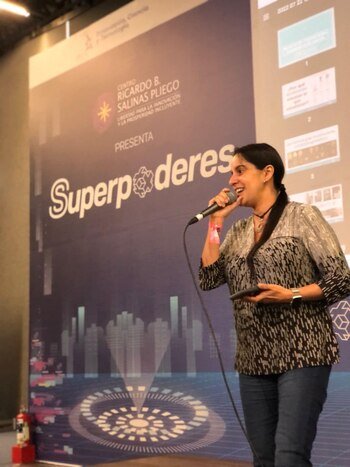
Flowers-Grace is believed to be among the factors influencing the advancement and persistence of women in these fields absence women’s references in the scientific field. “As we see more women in science, we women can imagine ourselves in a similar position,” she said. The specialist and teacher emphasized that making role models visible is essential to motivate more people to follow these steps. And while he acknowledged that female participation in university admissions is increasing, it is still a poor indicator when it comes to leadership roles.
The doctor believes that the performance serves not only as a role model, but also as motivation and an example of the resilience needed to go above and beyond and make room for new generations. First of all, because for women, scientific careers are still full of disparaging comments from professors and male colleagues who use psychological abuse towards them, mentioning that “women don’t know math” or “you’re here until you get married”. This ongoing violence affects women’s confidence and persistence in these disciplines.
In addition, there is gender biases in working with equipment and conducting experiments. Candy Flores-Gracio commented that in fields such as physics, which use labs with equipment, there is a prevailing misconception that women cannot handle certain devices or perform certain operations because “they might get injured” or simply “lack the strength.” In a conversation with Infobae, Flores-Gracia emphasized that machine experiences and experiments in schools are already limited by the lack of investment by universities in this special equipment; However, it is complicated for women, given that they may miss out on important practices for their learning because of these biases.
“This constant psychological aggression, constant psychological violence “you don’t belong here, what are you doing here? Why are you here? It’s better to get married.” It becomes very difficult to continue. So, women have to be even more resilient, we have to have even more strength to stay in these roles,” she stated.
Flores also emphasized that on top of all of the above are additional problems that women in Mexico or Latin America already have, such as uncertainty when entering the university, staying in their institutions late, suffering harassment in public and private places, among other problems.
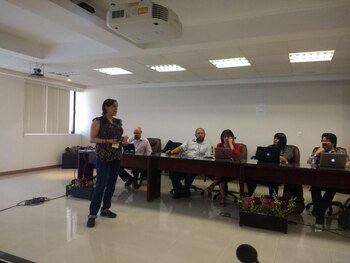
In an academic environment, motherhood This is also presented as one of the main challenges faced women scientists. According to Candy Flores-Gracia, the assessments conducted National System of Researchers (SNI) They often don’t give women the time they need to balance their careers with the demands of motherhood. Although some organizations allow additional periods to achieve certain tasks or assessments, this time is not always sufficient to cover the required period of care and attention for children. “Pregnancy lasts nine months, and the time to care for a newborn is longer”– says the scientist.
This problem is compounded by the overload of domestic responsibilities that usually fall on women. According to the United Nations (UN), women do 2.5 times more housework than men, despite both having professional activities or the same level of education. In this sense, Flores-Gracia cited a study Gender, mobility and parents’ share of daily trips with and for children: a cross-country comparison of time use, published in Journal of Transport Geography, in which it was demonstrated that mobility patterns professional men and women are significantly different. While men tend to mostly commute between home and work, women have to balance their time between different roles, such as taking children to school, then to extracurricular activities, and other household duties. Dr. Candy emphasized, “Obviously breeding For women, it becomes even more difficult, they go back and forth between different places, while men have a direct path between their interests.” Without a partner, Flores-Grácia felt that it was necessary to have a circle of support in order to carry out motherhood and a professional career without problems. However, it is not always easy and requires visibility and recognition of those who have achieved this balance.
Another important aspect is cooperation as a couple in the academic field. Flores-Gracia stressed the importance of having a partner who shares the responsibilities evenly. “It remains a challenge to find a couple who have truly deconstructed themselves and understand that raising children is a shared responsibility.”he said. In the case of academic couples, as a rule, the man is the one who takes on the doctorate first, while the woman postpones to deal with the demands of motherhood, according to an expert speaking to Infobae. And he asked a fundamental question: “How many of these academic women make themselves visible to demonstrate that it is possible to combine motherhood with a professional career?”.
Mexico faces significant educational deficits, particularly in science and math, according to Flores-Gracia candy in suggested that this educational gap is multifactorial and ranges from malnutrition of the child to the lack of teachers passionate about teaching these disciplines. “A malnourished child obviously cannot learn; similarly, if a person is not interested in what he is teaching, it is very difficult to get others to join the subject,” he said, emphasizing the complexity of the country’s educational problem.
He added that it is equally difficult to create a comprehensive field of education due to constant changes in curricula. In addition, the doctor noted that the way mathematics, physics and biology are taught separately is one factor that can cause distance between students and STEM, as they should be taught as related subjects that explain and explore the universe. However, he admitted that this type of education would be more possible if the groups of students were smaller, a maximum of 15 students, instead of 30-40 (as is currently done), as this would provide more opportunities for individual control, designing experiments and even introducing interesting methods for students.
“In large groups, experiments become practically impossible due to the number of children. It becomes ‘I do the experiment and you watch,’ because it’s not fun and can demotivate you,” he commented.
According to Flores-Gracia candymany companies have begun to seek gender parity as a first step. However, he cautions that “it doesn’t solve anything.” To really make progress, it’s critical that companies not only hire more women, but also offer them real opportunities for professional growth. One of the main challenges is the cultural burden that still prevails in organizations, especially in the case of women in the process motherhood. Flores-Gracia notes that “leaving work early to care for a sick child is still seen as a barrier.”
Need in teachers within companies is another important point. Flowers-Grace noted that “teachers in similar positions can help women imagine themselves in these roles and understand what we can do.” She noted that both in education and in companies, eradicating sexist behaviors and thoughts is critical to career advancement, as many women who demonstrate leadership are unfairly described as ‘angry’ or ‘emotional’, in contrast to their male peers who are seen as ‘strong’.
The same perspective applies to diversity and inclusion committees in companies. A specialist told Infobae that “those who volunteer their work are generally women because they understand the importance of these issues.” However, these tasks are not always paid or recognized, which further complicates the balance between work responsibilities and professional development.
As for how she can become a teacher, Flores-Gracia believes the key lies in empirical experience and a desire to share knowledge. “LinkedIn is a great network for communication professional women” and to find women-focused events, especially in big cities, that foster those connections. Dr. Candy stressed the importance of participating in these events and groups as they offer a safe and sensitive space where women can share their concerns and Strategies for overcoming barriers in the work environment. “If we don’t support each other, no one else will help us,” she says.
There are several groups, e.g Women technicians in Latin Americans technowhich are dedicated to promoting the professional development of women in various fields. Participation in these groups can be critical to advancing women’s careers and promoting a more inclusive work environment. Candy Flores-Gracia concluded by emphasizing that personal and professional development go hand in hand and the existence of these groups is essential to its achievement.