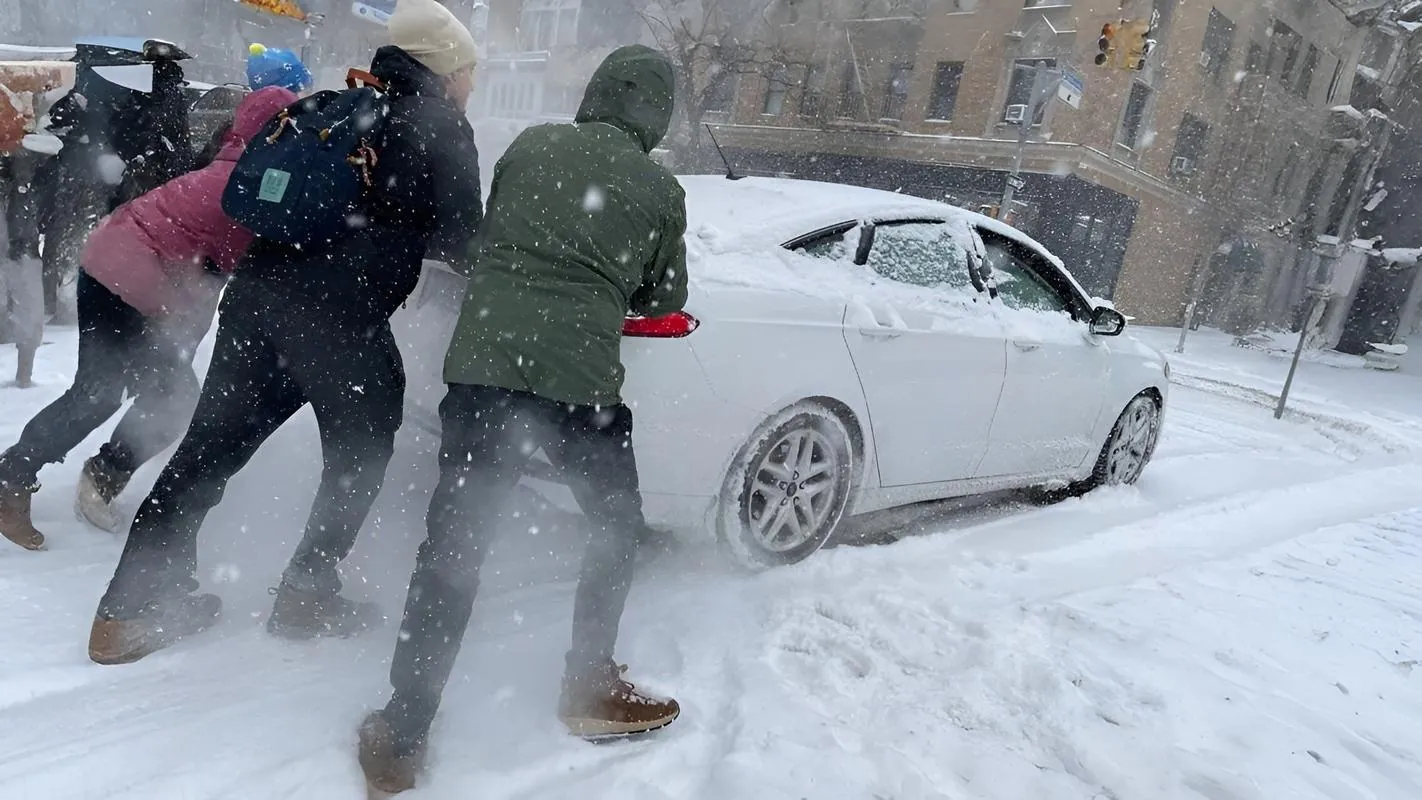
Just as millions of Americans grapple with the devastating aftermath of a powerful winter storm, forecasters are warning that the relief may be short-lived. A new, potentially catastrophic weather system is forming, with models suggesting a “bomb cyclone” could slam the East Coast this weekend, bringing another round of heavy snow, hurricane-force winds, and life-threatening cold.
According to the National Weather Service (NWS), while uncertainty remains regarding the exact track, the chances have significantly increased for a major storm that could deliver impactful snow and wind to the immediate East Coast starting Saturday.
The Forecast: A “Double Bomb” Threat
Early Tuesday morning, the NWS issued a statement predicting that a strong surface low-pressure system will rapidly develop off the Southeast Coast on Saturday before moving off the Mid-Atlantic by Sunday. This system is expected to interact with the existing very cold air mass, resulting in widespread heavy precipitation and gusty winds.
The most alarming data comes from the European Center for Medium-Range Weather Forecasts (ECMWF), a leading global weather model. Forecasters note that the model is simulating a system that could intensify 180% faster than the minimum threshold for “bombogenesis,” effectively creating a storm stronger than a “double bomb”.
- What is a Bomb Cyclone? Bombogenesis occurs when a storm’s central atmospheric pressure drops at least 24 millibars in 24 hours. This signals rapid intensification, making these storms significantly more hazardous than average winter systems due to their ability to produce hurricane-force wind gusts and extreme precipitation.
Compounding a Deadly Situation
The timing of this potential storm could not be worse. As of Tuesday morning, more than 550,000 residents on the East Coast remained without power as crews worked tirelessly to repair damage from last weekend’s ice and snow.
If a bomb cyclone makes landfall, it could compound the hazards of an already dangerous situation.
- Extended Outages: For residents in the Southeast who rely on electricity for heat, further outages could mean days without warmth in freezing conditions.
- Extreme Cold: Gusty winds from the new storm could send wind chills plummeting well below zero, significantly raising the risk of hypothermia, frostbite, and frozen pipes.
The region is already reeling from the previous week’s severe cold, which has been linked to at least 30 deaths across affected states.
Snow vs. Ice: What to Expect
Unlike last weekend’s storm, which coated the region in a damaging layer of ice, meteorologist Ben Noll reports that this weekend’s system will likely be an all-snow event. This is due to the preexisting reservoir of cold air already in place across the eastern half of the U.S..
However, the NWS cautions that it is too soon to predict exact snowfall totals or specific locations. The storm’s ultimate impact on travel and infrastructure will depend heavily on its track and how close it gets to the eastern seaboard.
The Science: Why is it So Cold?
Forecasters emphasize that the extreme cold is here to stay for at least the next two weeks. The culprit is a distorted polar vortex—the large area of low pressure and cold air surrounding the North Pole.
Currently, the vortex is disrupted, allowing frigid Arctic air to spill southward into North America. Judah Cohen, an MIT climatologist who tracks these phenomena, warns that more Arctic blasts are on the way, meaning the region will remain vulnerable even after this weekend’s storm passes.
With the forecast developing rapidly, residents are urged to monitor local weather updates closely as the storm takes shape over the course of the week.