“Today, women and girls are 25% less likely than men to know how to use digital technologies for basic purposes, 4 times less likely to know how to program computers and 13 times less likely to apply for an ICT patent,” UNESCO points out to highlight an international panorama that still needs a lot of work to develop.
These numbers are not unique in a history that places the female gender in unequal opportunities. Fundación Pescar is a non-profit civic organization that stands out because it is data-driven; That is, it constantly measures the impact of its programs, which “combine technical training, the development of interpersonal skills and digital competences, and adapt to different audiences and technical orientations.”
In collaboration with private companies and organizations, Fundación Pescar works in the areas of “employment, graduation, continuity of education and career development”, affecting young people aged 17 to 29 and women over 18 who are in a vulnerable situation.
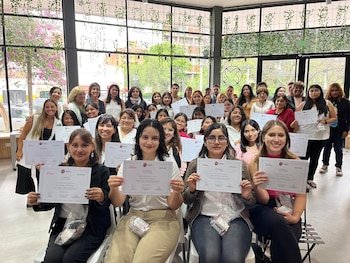
In the specific case of the “Women in Technology” program: “During six months, participants receive more than 300 hours of training in areas where there is a special demand for work today: Full Stack Web Programming, technical support, SAP and data analysis, as well as CRM administration.” Tikmas spoke to Silvia Uranga to learn more about this successful educational program in synergy with the world of work.
—How did the Women in Technology (WT) project proposal come about? What does it mean to be a “woman in tech”?
— The proposal stems from a specific need: the gender gap in the technology sector is still one of the deepest in the world. Today, only 23% of people working in the technology sector globally are women, a figure that highlights the need to promote more professional talent and employment opportunities to reduce inequality of opportunity. At Fundación Pescar, we have been working for many years to increase the employment of young and adult women, and we have found in the L’Oréal Foundation a strategic ally to turn this challenge into a real opportunity.
WT is a federal technical training and social-emotional skills development program that offers women across the country access to digital knowledge, end-to-end tools and real-world employment opportunities. It is designed for women over 18 years old who are looking for a job improvement, professional transformation or taking their first steps in the world of IT. Today, being a woman in technology is synonymous with creating, advancing and opening doors. From this place, barriers are broken down, limitations are challenged, and spaces that previously seemed distant are occupied. It plays a strategic role that not only transforms the technology industry, but also expands the future of many others.
—How was the development and implementation through the alliance between Fundación Pescar and the L’Oréal Foundation for Women in Argentina?
— The project was developed from the perspective of integrated learning, an approach that is part of Pescar’s DNA. We know that it’s not enough to simply teach technical content to transform careers: it’s critical to provide the necessary technology tools, build confidence, strengthen a life project and offer personalized support. Only in this way it is possible to achieve learning processes that will really open up new professional opportunities. For this reason, our model combines technical training, social-emotional development, business mentoring and post-university monitoring, consolidating an offer that accompanies each participant in a transversal way. Added to this is a distinctive feature of Pescar: a significant part of our training is carried out in companies, which allows us to learn in direct contact with the world of work and build professional networks that are key to employment.
Together with the L’Oréal Foundation for Women, we developed an offer that reinforces these pillars by integrating digital content, employability training and strategic engagement with technology companies. This alliance has allowed us to expand our territorial scope, optimize resources and provide quality training with concrete and measurable impact at every stage of the process.
– This is a federal project. What pain points and opportunities have you identified in each province? In addition to possible differences, what similarities and common needs have you found?
— In the federal program, there are always different realities, but also recurring problems. Among the key pain points we identify are very deep digital gaps in access to devices and connectivity; limited supply of affordable technology training in provinces far from major urban centers; glass ceilings and cultural barriers that hinder women; and lack of local professional support networks. However, we also found valuable opportunities: huge interest from women of all ages, capacity for community organizing, underrepresented talent and a strong commitment to advancing their careers. A common need is emerging across the country: the desire to learn, grow and break through in a sector that offers quality work.
The results we achieved in the first edition of WT clearly reflect the impact of the program: 73% employment, 100% completion of education, 63% continuity of training, 34% job projection; an indicator that reflects an increase or improvement in employment conditions. These achievements show that with a combination of technical training, technological tools, close support and concrete opportunities, talent flourishes even in environments where there has historically been no room for it to develop.
—What do students who have completed their studies note the most?
— 100 percent completion of the program is an indicator that causes pride. We believe that this achievement is due to several factors: constant support, individual methodology, pedagogical quality, a strong sense of community among participants and a clear goal: to promote their employment or improve their professional opportunities. Most participants report a sense of competence. Learn how they can program, problem solve, work as a team, and tackle new challenges. Many say that the program offers them a new perspective on the future, greater economic independence and, above all, self-confidence.
Over the years, we have witnessed profound transformations: women who have gone from doubting their own worth to leading teams, supporting their homes and becoming role models for their children, their communities, and for other women who today also dare to design a different future.
— As you emphasized, the offer is clearly combined with employment opportunities and the importance of continuous learning. What is the strategy for the development of the program for the near future?
— Our task is to consolidate WT as a sustainable and scalable model. To do this, we are currently working on three strategic areas; more business alliances that enable professional internships, job search and mentoring. Expanding the training offer, including new industry profiles. And strengthening the alumni ecosystem so that they continue their education related to the opportunities and accompanying their work placement. The aim is that learning is not an arrival point, but, as we have confirmed and continue to confirm every day, the beginning of a continuous and transformative professional journey.
-– Does the program have a student story that impacted you?
— We are deeply inspired by the story of Kamila, a graduate of the first batch of the WT program. Your professional present is a reflection of the main objective of the program: to accompany real trajectories of growth and creation of opportunities. Camila is 25 years old, she is from the capital Salta. His interest in technology began in 2021, when he decided to learn from free courses. In 2022, he started a technical degree in software development, which is currently finishing, waiting for only two subjects.
Her commitment and dedication earned her access to an internship at Globant as a front-end programmer. He later worked as cloud support at Artech for a project with P&G, and then ventured into freelancing doing website development and programming. This journey led her to work at Accenture in December 2024, where she continues to develop as a security analyst. In addition, he plans to continue consolidating his education: in 2026, he plans to obtain a technical degree in cyber security.
– What is your relationship with technology as a woman and as the director of the Pescar Foundation?
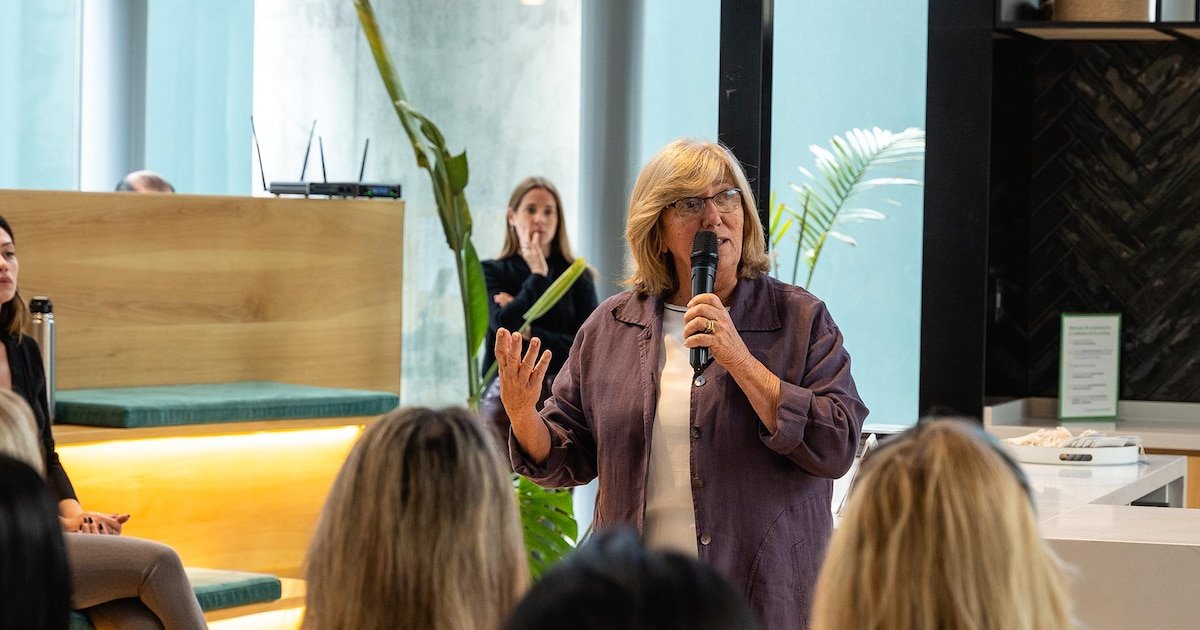
— My relationship with technology, both as a woman and as the director of Fundación Pescar, is very active and conscious. I strongly believe that technology is not neutral: it can exclude or expand rights. Professionally, I see it as an important tool for creating real opportunities, providing learning and opening up pathways that didn’t exist before.
And as a woman, I understand this as a space that we must inhabit more and more: not only by consuming it, but by creating it, managing it and making decisions that determine its future. This is what I have advocated throughout my career, in every institution I have had to lead. I believe that women’s participation in technology is not only necessary; It is transformative.
– “Women in technology” seem to be silent, but we need to make sure that it is, and not a niche. What inspires Fundación Pescar to continue working on this?
– In Pescara, we know that nothing happens by “decantation”. More women in tech requires intention, support and specific policies. What inspires us to continue to advance this path is that a woman who accesses technology training not only changes her future job: she changes the work of her family and empowers her entire community. We are working on this because technology defines the present and will define the future, and we cannot allow this future to be built without the vision, talent and sensitivity of women. Every program and every alliance we create is driven by the belief that inclusion in technology is a real tool for social mobility. And as long as we continue to see that impact, we will continue to push this challenge even harder.
I would like to emphasize that WT confirms what we see every day: talent is distributed, but opportunities are not. Education and real transformation require continued commitment and greater private sector investment. Public policy is fundamental, but usually takes longer to implement. At the same time, the private sector has the opportunity and responsibility to accelerate change, invest in training, open doors and accompany the processes that are changing lives today. Our commitment is to continue to close this gap: through strategic alliances, policy impact and life-changing learning, because technology does not wait.